
Your blog posAI-Powered Threats Are Targeting Small Businesses—Here’s How to Defend Yourselft
Cybersecurity is no longer just a concern for large corporations. A recent Bitdefender report reveals that 43% of cyberattacks now target small businesses—and AI is making these attacks more sophisticated than ever
Ilie Lucian - Founder & CyberSecurity Engineer, Videographer, Web Designer, SEO
6/24/20262 min read
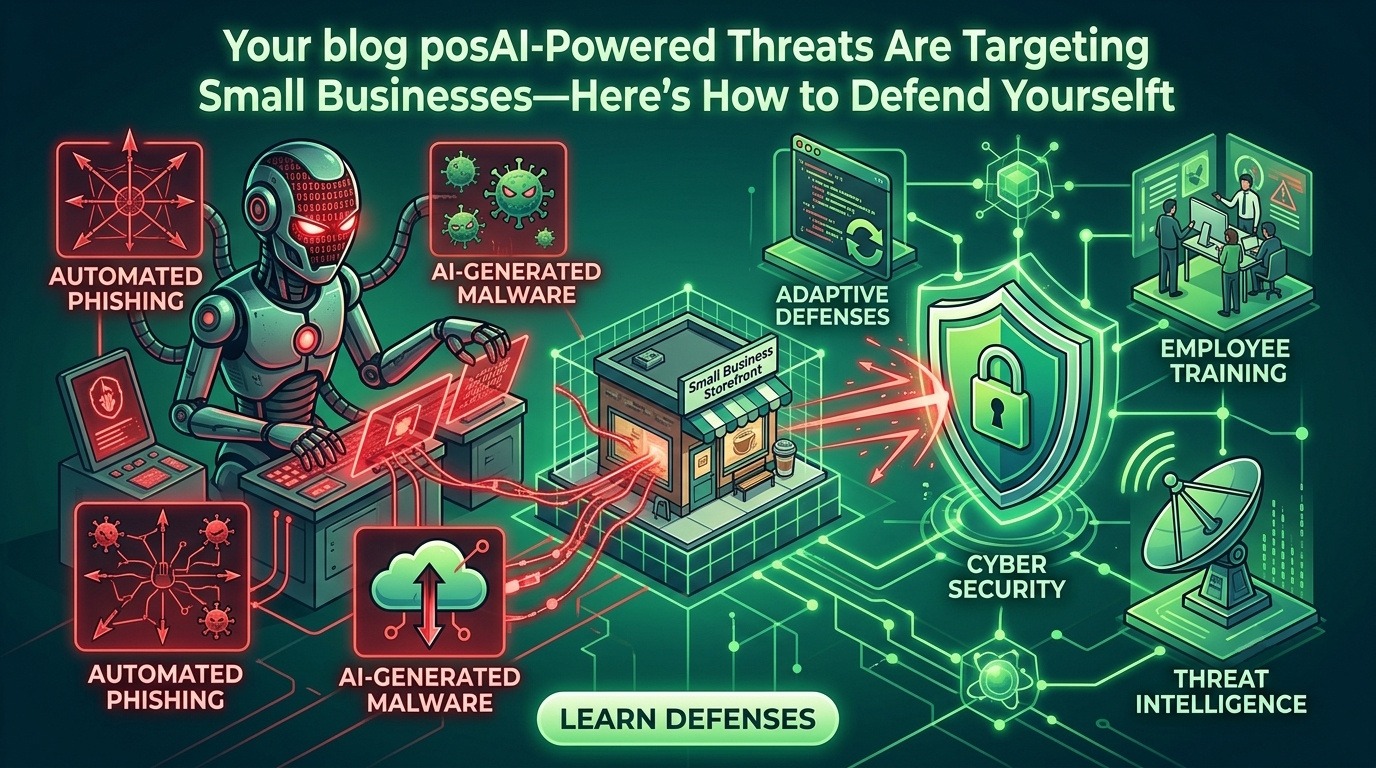
How Attackers Are Using AI Against You
1. AI-Generated Phishing That Looks Real
AI can now craft emails that sound exactly like a coworker, vendor, or client. Attackers scrape data from LinkedIn, company websites, and previous data breaches to personalize each message. An HR manager might receive what looks like a normal invoice; a founder might get a message that seems to come from their accountant. Everything looks familiar—until it isn't. According to ESET, over 40% of micro businesses experienced a data breach or cyberattack in 2024, with a third of those being phishing attacks .
2. Deepfake Calls and Messages
AI can clone voices from just a few seconds of audio—from a social media clip, a webinar, or even a voicemail greeting. Attackers then impersonate CEOs, business partners, or vendors to request urgent wire transfers or payment changes .
3. AI-Driven Invoice Fraud
Attackers study real invoices and vendor relationships to generate near-perfect copies of legitimate payment requests. They often send these at the exact moment a real invoice is expected, with messages like "We've updated our bank details" or "Please use the new account for this payment" .
4. Credential Attacks at Scale
AI doesn't guess passwords randomly—it analyzes massive lists of leaked credentials, predicts common patterns (seasons, years, symbols), and tests variations across multiple platforms simultaneously .
5. Evolved Malware
AI-driven malware changes its code automatically while keeping the same malicious behavior. By the time one version is detected, several new ones already exist .
How to Protect Your Business Without an IT Team
The good news? Strong protection no longer requires enterprise budgets or technical expertise .
1. Implement Multi-Factor Authentication (MFA)
Microsoft estimates MFA can block 99.9% of account compromise attacks. Enable it on all critical accounts: email, payment platforms, and social media .
2. Establish Verification Protocols
Require sensitive requests to be confirmed via a second channel. Don't change payment details based on a single email—always verify by phone or through a known contact .
3. Deploy Email Security Tools
Use solutions that analyze behavior and patterns, not just keywords. Protect your inbox from impersonation and payment redirection attempts .
4. Maintain Isolated Backups
Keep offline backups that ransomware can't reach. Test them regularly—without a tested backup, you're at the mercy of attackers .
5. Invest in Business-Grade Security
Solutions like Bitdefender Ultimate Small Business Security start at around $180/year and offer comprehensive protection tailored for small teams .
The Bottom Line
"Small businesses are no longer dealing with the kind of attacks that rely on sloppy emails or obvious red flags," the Bitdefender report states . AI has fundamentally changed the game—but you don't need an IT department to stay safe. The most effective defense is often the simplest: clear procedures, regular training, and a verification mindset.
Need help protecting your business? Book a free security consultation at 1cyber.eu
1Cyber Agency
Easy build a website for your business
© 2026 1Cyber Agency-Hardened code and flat-rate packages.
ZERO-TRUST DIGITAL DEPLOYMENTS