Why Small Businesses Are the #1 Target for Cyberattacks in 2026
43% of cyberattacks target small businesses – and most never see it coming
CYBERSECURITY
Ilie Lucian - Founder & CyberSecurity Engineer, Videographer, Web Designer, SEO
6/23/20263 min read
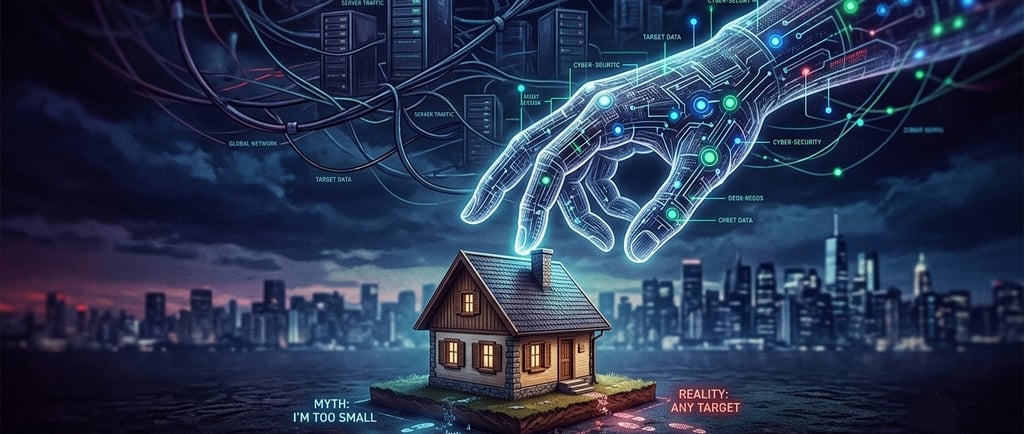

If you run a small business and think you're too small to be a target, think again. In reality, that exact mindset makes you a prime target.
The "I'm Too Small to Be Hacked" Myth
Many entrepreneurs believe hackers only go after big corporations. It's one of the most dangerous myths in business today. According to the 2025 Verizon Data Breach Investigations Report, 43% of all cyberattacks now target small businesses.
Why? Because cybercriminals are opportunists. They know small businesses often have fewer security resources, weaker passwords, outdated software, and less-trained employees. In short: you're an easy target with valuable data.
The Real Risks
A cyberattack can be devastating for a small business. The average cost of a security incident for a small company is estimated at around $254,445. And for many, the impact is even worse.
Data shows that 60% of small businesses that suffer a significant cyberattack close within six months. Beyond the financial costs, reputation damage can be permanent, and customer trust is often lost forever.
The Most Common Threats for Small Businesses
The threats facing SMEs are actually the same ones hitting large companies—just with fewer defences in place:
Phishing & Business Email Compromise – Attackers send emails that look legitimate to steal login credentials or authorise fake payments. Over 90% of attacks start with a simple email.
Ransomware – Malware that encrypts your files and demands payment for decryption. Nearly 88% of incidents targeting SMEs in 2024 involved ransomware.
Credential Theft – Stolen and reused passwords that give attackers direct access to your business accounts.
How to Protect Your Business Without a Huge Budget
You don't need a 20-person IT department to stay safe. Here are the essential measures you can implement right now:
1. Multi-Factor Authentication (MFA)
This is your single most important defence. Enable MFA on all critical accounts: email, payment platforms, social media. Microsoft estimates that MFA can block 99.9% of account compromise attacks.
2. Regular, Secure Backups
The simplest defence against ransomware is having a clean backup. Make sure backups are stored separately from your main system and test them regularly. Without a tested backup, you're at the mercy of attackers.
3. Keep Everything Updated
Outdated software is one of the most common attack vectors. Enable automatic updates and make sure all plugins, themes, and operating systems are always up to date.
4. Train Your Team
Your employees are your first line of defence. Train them to recognise phishing emails, use strong passwords, and report anything suspicious. Informed people are your best firewall.
5. Invest in a Business-Grade Firewall & Antivirus
Forget free consumer solutions. Use a firewall that monitors traffic and security software that detects suspicious behaviour, not just known viruses.
6. Control Access to Data
No one should have access to everything. Each employee gets only the permissions they need for their work. Review these permissions regularly and remove access immediately when people leave the company.
Why Work with an External Partner
If you don't have the time or expertise to manage these aspects yourself, you can work with a managed service provider to handle monitoring, backups, updates, and overall security. In many cases, the cost of such a service is far less than the losses caused by an attack.
Final Thoughts
Cybersecurity is no longer optional—it's a necessity for any business that wants to survive. It doesn't have to be complicated or expensive—just consistent and well-directed. Start with small steps, but start today. Your business's future might depend on it.
Cybersecurity isn’t just for big corporations anymore.
If you run a small business, you’re actually more likely to be attacked.
Here’s what’s happening right now:
43% of all cyberattacks hit small businesses
The average cost of a breach is over $250,000
60% of small businesses that get hacked shut down within 6 months
The good news?
You don’t need a huge budget to protect yourself.
Simple steps like MFA, regular backups, software updates, and staff training can stop most attacks before they even start.
🔐 Need help securing your business?
We offer:
✅ Vulnerability assessments
✅ Website maintenance & backups
✅ Cybersecurity audits
✅ Video editing & web design
Let’s talk about your security. Drop us a message or visit 1cyber.eu to book a free consultation.
1Cyber Agency
Easy build a website for your business
© 2026 1Cyber Agency-Hardened code and flat-rate packages.
ZERO-TRUST DIGITAL DEPLOYMENTS