
A New AI Model from China Just Shook the Market. Here’s What It Means for Security.
If you follow tech news or the stock market, you might have noticed something unusual this week. Chip stocks—especially Nvidia, Intel, and AMD—took a hit. The Nasdaq dropped, and investors started looking nervous
Ilie Lucian - Founder & CyberSecurity Engineer, Videographer, Web Designer, SEO
7/17/20262 min read

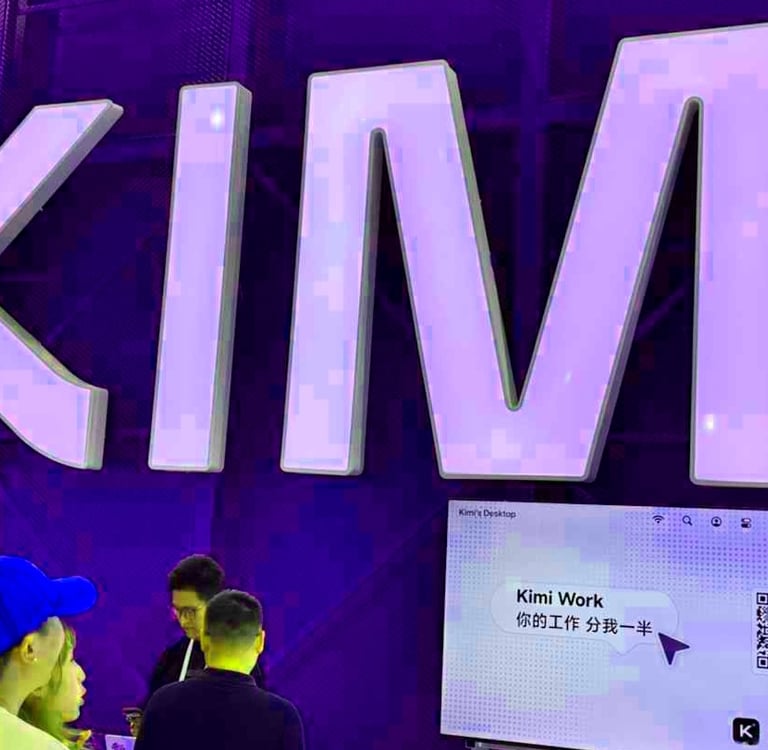
The trigger? A new AI model from China called Kimi K3, built by a startup called Moonshot .
And this is not just about money. It's a serious signal for anyone who cares about cybersecurity, AI strategy, and how these technologies are evolving.
What Is Moonshot's Kimi K3?
Kimi K3 is a 2.8 trillion-parameter AI model, which makes it one of the largest open-weight models in the world . For context, that is bigger than many of the most advanced models from US companies like OpenAI and Anthropic. And it's available to the public.
The market reaction was strong because investors suddenly started asking: "Are US companies spending too much on AI, and is Chinese competition going to undercut them?" .
But the security implications are what worry me more.
Why This Matters for Cybersecurity
1. Open-Source Models Are Harder to Control
Moonshot made Kimi K3 "open-weight," which means the core model is available for anyone to download and modify. This is great for research and innovation—but it also means that threat actors can access the same powerful technology. They can fine-tune it for malicious purposes: writing better phishing emails, creating more convincing deepfakes, or automating vulnerability research.
The era of "AI as a secret weapon" is over. The weapon is now public.
2. Competition Is Shifting to Capability, Not Just Hype
The stock market panic—where the Philadelphia SE Semiconductor Index dropped over 20% from its peak—shows that investors are re-evaluating the ROI of AI . Companies that were banking on AI supremacy may now face real competition, and that could lead to corners being cut in security as companies rush to catch up.
3. Geopolitics Is Part of the Equation
The AI race has become an extension of the broader US-China tech rivalry. One of the triggers for the selloff was concern over Chinese AI models, combined with existing geopolitical tensions . For security professionals, this means dealing with a landscape where the dominant players are not just motivated by profit, but also by state-level objectives.
What Should You Do?
If you're running a business, managing an IT team, or just paying attention to security, this is not the time to relax.
Reassess your AI exposure: If you rely on AI tools, know where they come from and how their models are maintained.
Monitor open-source AI: New models are being released at an incredible pace. Keeping track of which models are available—and what they can do—is now part of threat intelligence.
Don't assume the US has a permanent lead: The assumption that "the best models come from US companies" is no longer a given. Your security strategy should account for that.
The market will recover. Tech stocks will go up and down. But the underlying shift—toward a more competitive, more open, and more global AI ecosystem—is permanent. And that is a security story worth paying attention to.
1Cyber Agency
Easy build a website for your business
© 2026 1Cyber Agency-Hardened code and flat-rate packages.
ZERO-TRUST DIGITAL DEPLOYMENTS